Skip to content

Robertson Studio

My WordPress Blog

Menu
  • Sample Page
Menu

NASA’s Hubble Seeks Lensed Supernova, Marks 200,000 Orbits

Posted on September 23, 2026

  • Hubble Home
    • About Hubble
    • The History of Hubble
    • Hubble Timeline
    • Why Have a Telescope in Space?
    • Hubble by the Numbers
    • At the Museum
    • FAQs
    • Hubble’s Impact & Benefits
    • Science Impacts
    • Cultural Impact
    • Technology Benefits
    • Impact on Human Spaceflight
    • Astro Community Impacts
    • Hubble Science
    • Science Themes
    • Science Highlights
    • Science Behind Discoveries
    • Universe Uncovered
    • Hubble’s Partners in Science
    • Hubble & Citizen Science
    • AI & Hubble Science
    • Explore the Night Sky
    • Hubble Observatory
    • Hubble Design
    • Mission Operations
    • Science Operations
    • Astronaut Missions to Hubble
    • Hubble vs. Webb
    • Hubble vs. Roman
    • Hubble Team
    • Career Aspirations
    • Hubble Astronauts
    • Images
    • Videos
    • Online Activities
    • e-Books
    • Sonifications
    • Podcasts
    • 3D Hubble Models
    • Lithographs
    • Fact Sheets
    • Posters
    • Hubble on the NASA App
    • Glossary
    • Hubble News
    • Social Media
    • Media Resources
    • 35th Anniversary
    • Online Activities

2 min read

NASA’s Hubble Seeks Lensed Supernova, Marks 200,000 Orbits

Several galaxies shine against black space, with a large cluster near center-left.
An image from NASA’s Hubble Space Telescope of galaxy cluster MACS J0417 is part of repeated observations to monitor for the reappearance of supernova Athena, which can help astronomers measure the expansion rate of the universe.
NASA, ESA, STScI, M. Pascale (UCLA); Image Processing: J. DePasquale (STScI)

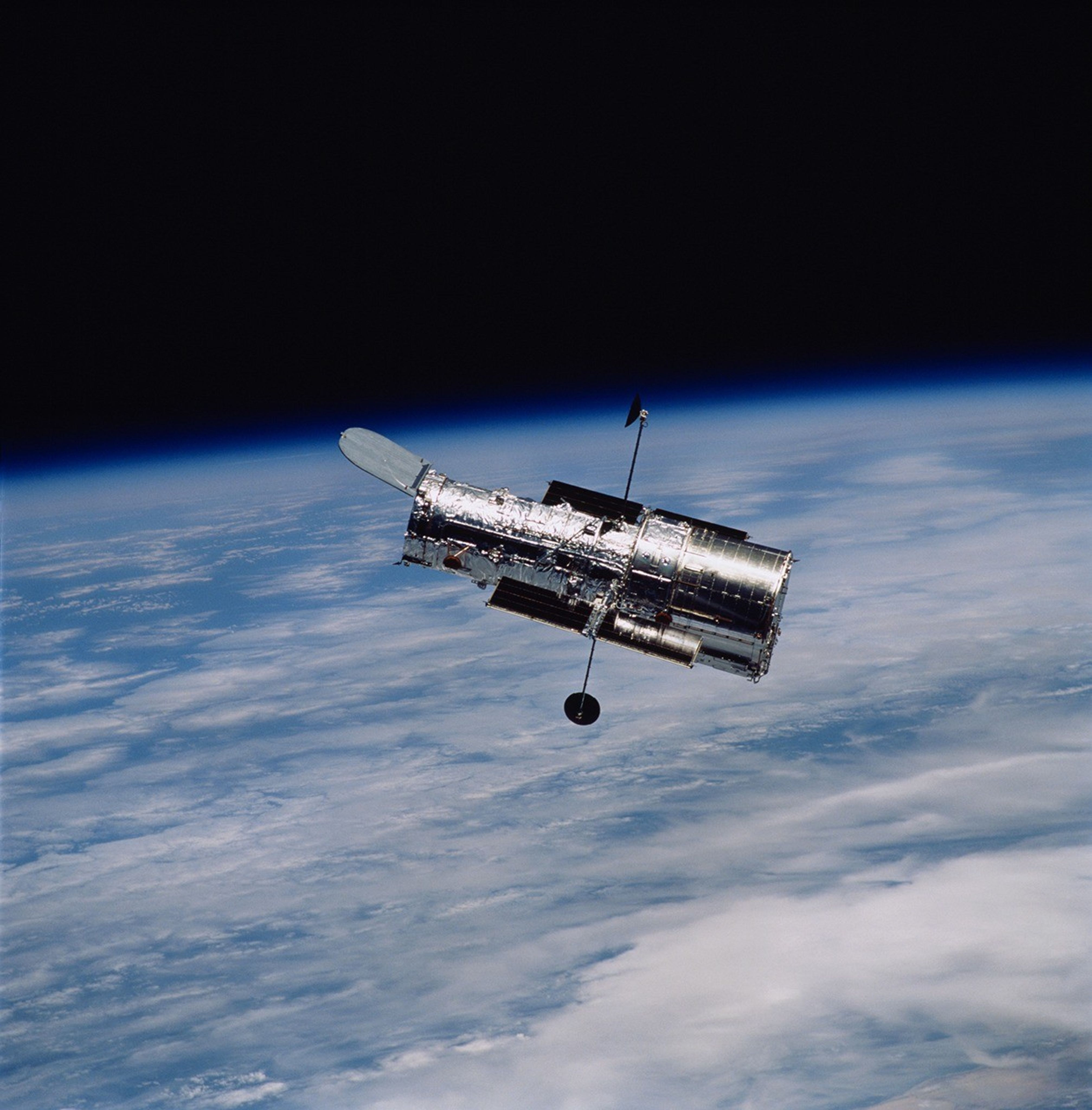
NASA’s Hubble Space Telescope completed its 200,000th orbit around Earth on Sept. 19, marking another new milestone for an observatory that continues to transform our understanding of the universe.

Hubble has traveled more than 5 billion miles around Earth over its 36-year lifetime, exceeding 1.7 million total observations. An observation completed on the day of the 200,000th orbit pertains to one of Hubble’s defining scientific legacies: measuring the expansion rate of the universe, or the Hubble Constant. The image takes advantage of the telescope’s ability to return to the same regions of the sky over time to monitor for the reappearance of a supernova, or explosion of a star, called Athena.

Massive galaxy cluster MACS J0417, located at the left center of the image, acts as a gravitational lens, bending and magnifying light from objects far behind it. Light from a supernova can reach Earth along multiple paths, causing the same stellar explosion to appear more than once at times separated by months or even years depending on the path it took. Supernova Athena, discovered by NASA’s James Webb Space Telescope in 2025, is predicted to reappear between now and early March 2027. Measuring the timing of Athena’s reappearances can help researchers map the mass of MACS J0417, which acts as a magnifying, foreground lens for distant objects, and refine our understanding of the expansion rate of the universe.

After more than 36 years in space, Hubble still is reaching new heights of scientific productivity and impact. Hubble’s unique ability to observe and analyze light in ultraviolet and visible wavelengths complements NASA’s James Webb and Roman Space Telescopes’ capabilities. As a result, demand for Hubble observing time remains high as astronomers request about seven times as much observing time as is available each year.

Hubble continues to observe targets across every area of astronomy around the clock, with real-time tracking of those observations available on NASA’s website.

Facebook logo
@NASAHubble

@NASAHubble

Instagram logo
@NASAHubble

Media Contact:

Claire Andreoli
NASA’s Goddard Space Flight Center, Greenbelt, MD
[email protected]
Share

Details

Last Updated

Sep 23, 2026

Editor
Michelle Belleville
Location
NASA Goddard Space Flight Center

Related Terms

  • Hubble Space Telescope
  • Astrophysics
  • Astrophysics Division
  • Galaxies
  • Goddard Space Flight Center
  • The Universe
Keep Exploring

Discover More Topics From Hubble

Hubble Space Telescope

Since its 1990 launch, the Hubble Space Telescope has changed our fundamental understanding of the universe.


Hubble’s Galaxies

Explore an assortment of galaxies with Hubble.


Hubble Science Highlights

Hubble’s most notable scientific discoveries reflect the broad range of research and the breakthroughs it has achieved.


Hubble Images

Explore Hubble’s iconic images of the universe, and view photos of mission operations and astronauts servicing Hubble in space.

Source: science.nasa.gov

Leave a Reply Cancel reply

Your email address will not be published. Required fields are marked *

Partners

best sweepstakes casino
no deposit bonus
new online casino

Recent Posts

  • Curiosity Blog, Sols 5010-5015: Checking out the Bands
  • Boom Year for Desert Blooms
  • APOD: 2026 September 23 – A New Lunar Crater: McGetchin
  • NASA’s Hubble Seeks Lensed Supernova, Marks 200,000 Orbits
  • Risk of Hydrazine Use Following Freeze–Thaw Exposure

Recent Comments

  1. A WordPress Commenter on Hello world!

Archives

  • September 2026
  • August 2026
  • July 2026

Categories

  • games
  • Uncategorized
©2026 Robertson Studio | Design: Newspaperly WordPress Theme