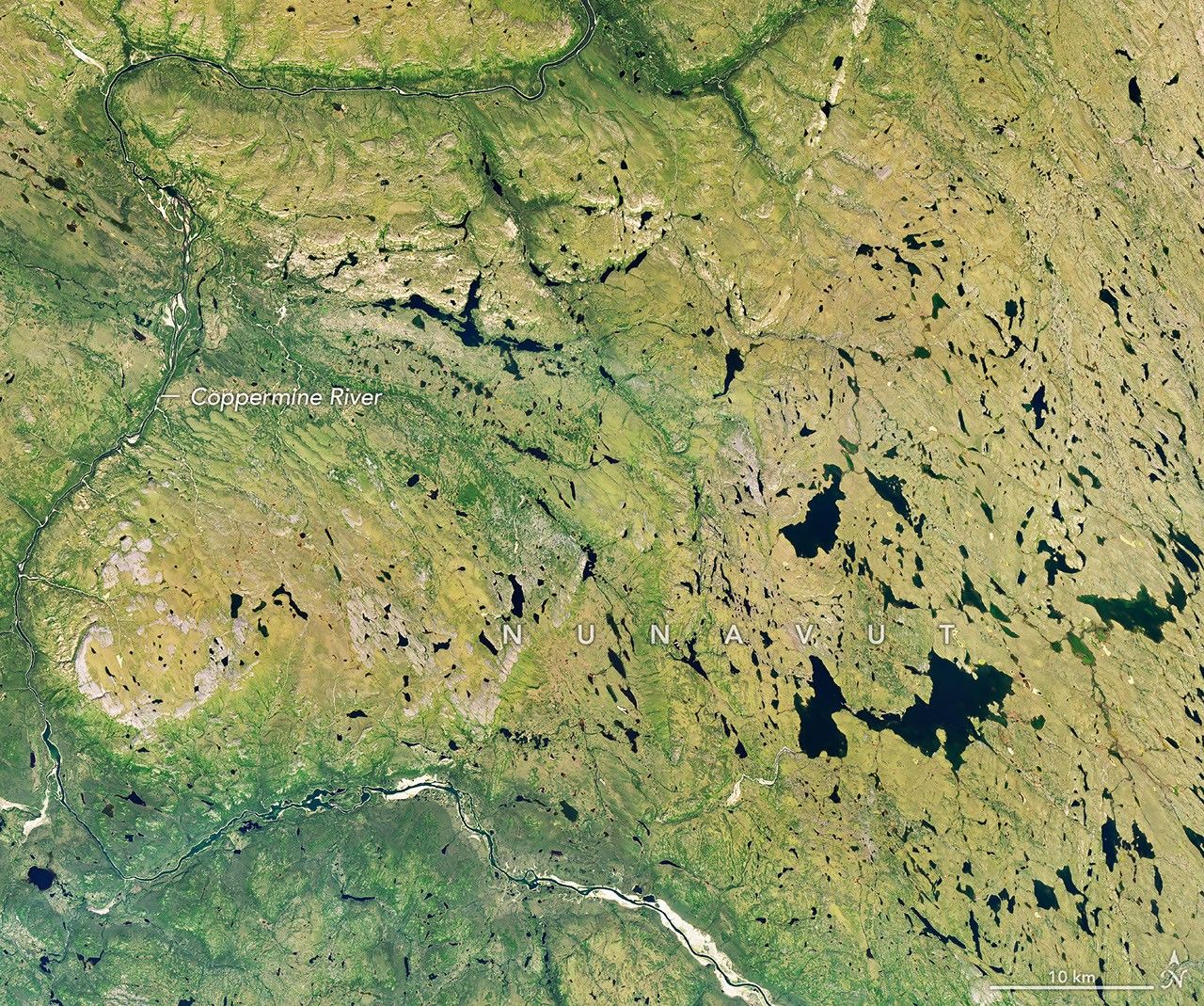
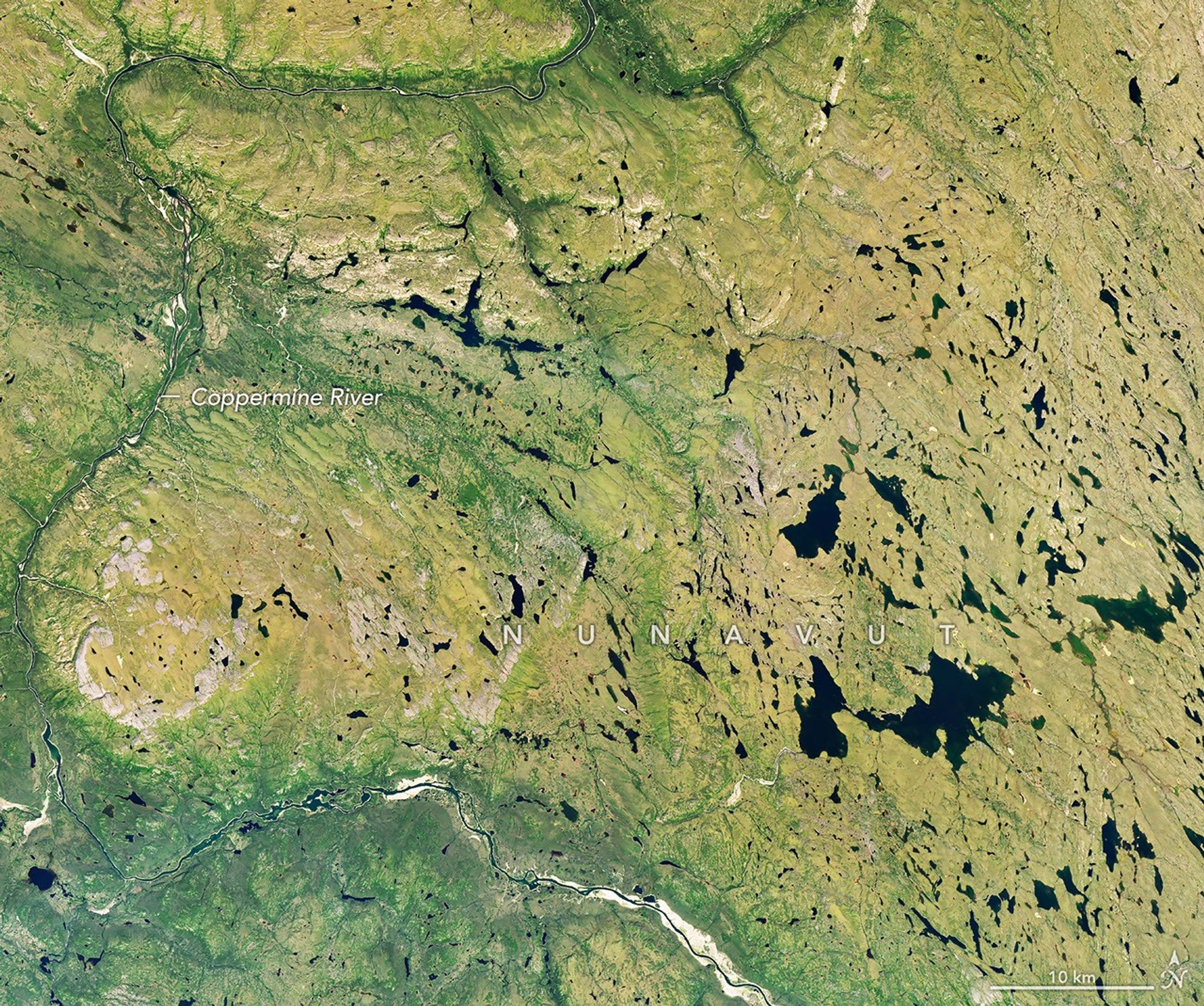
July 27
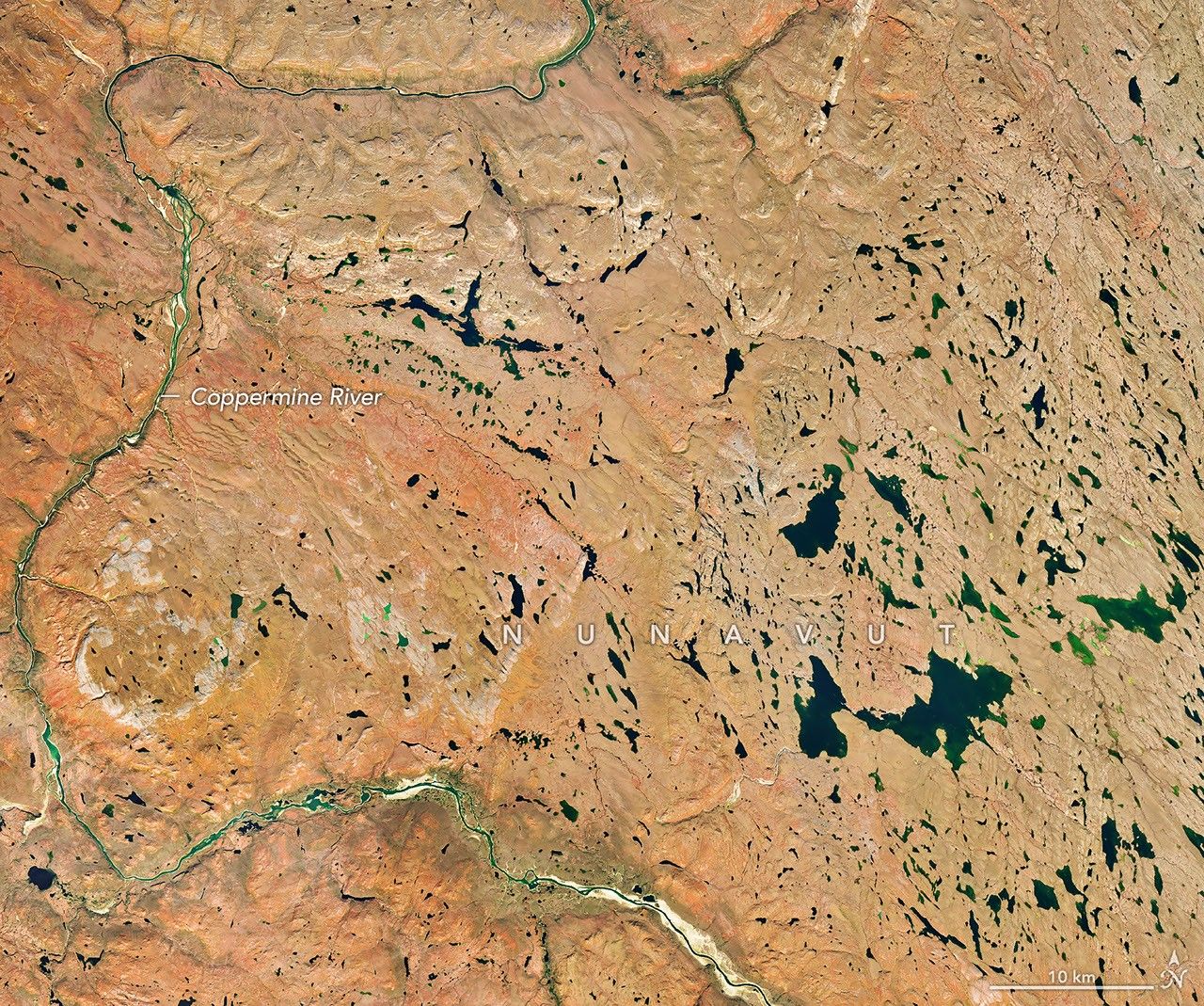
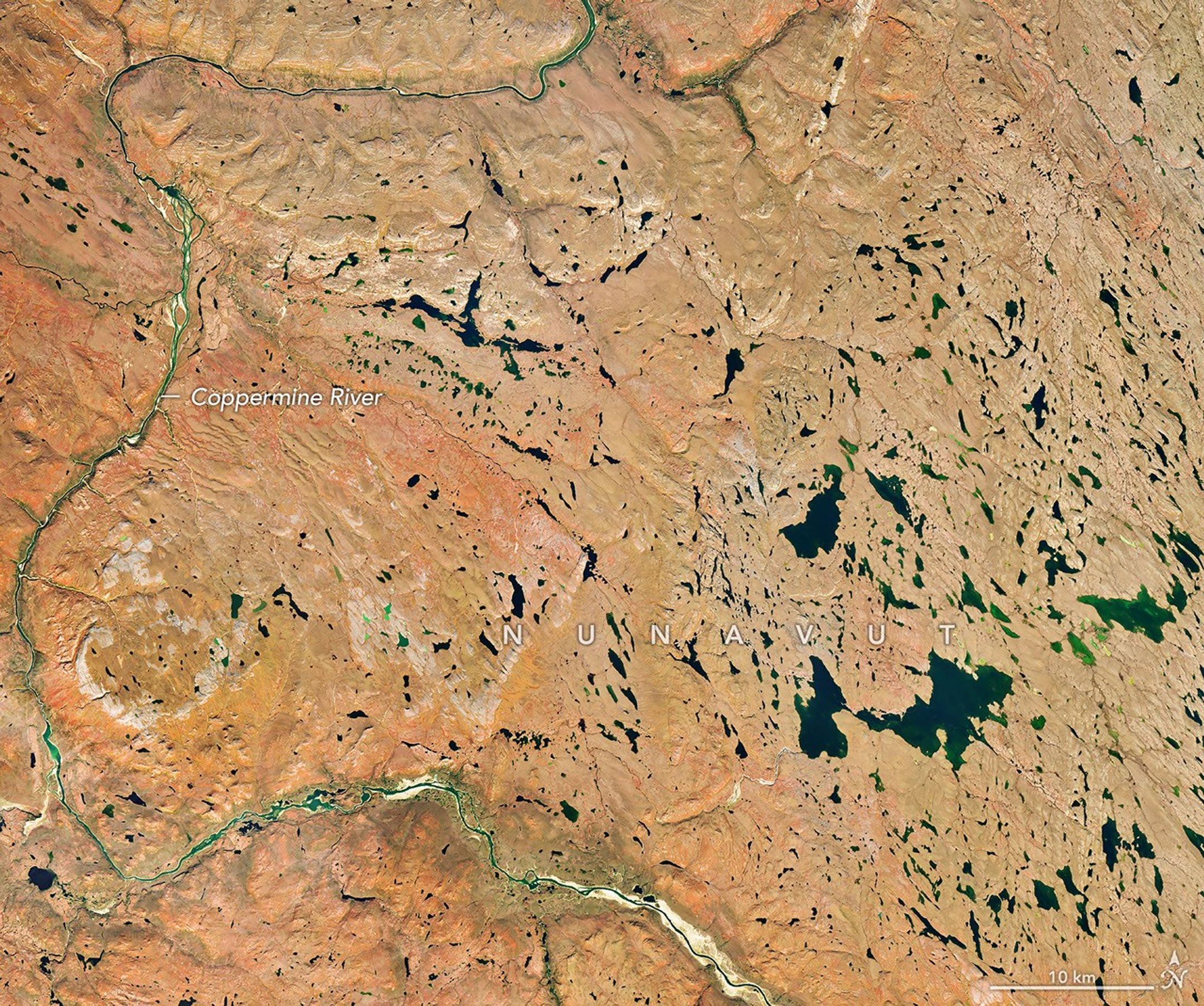
September 6
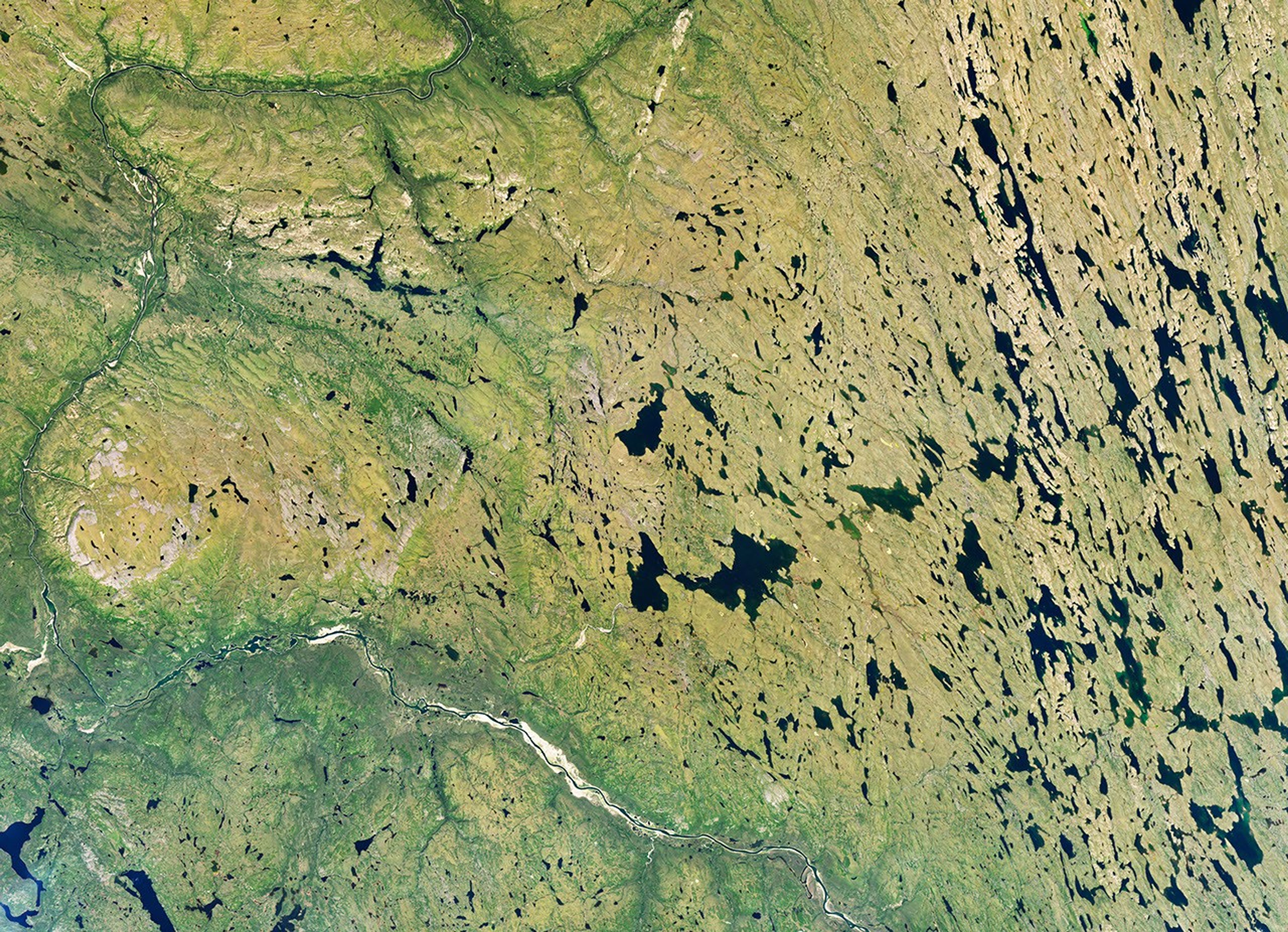
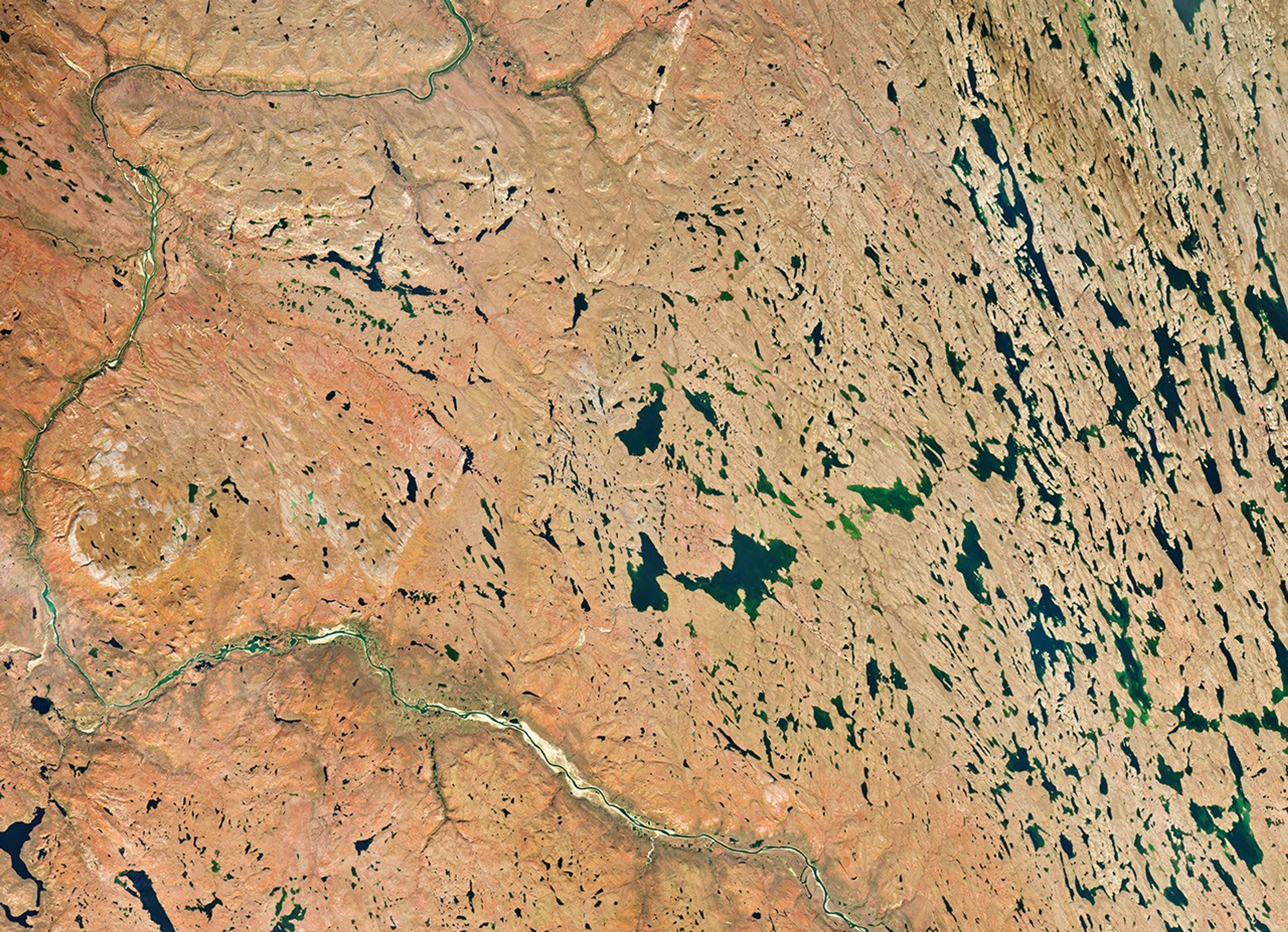
As North America rode out a summer of remarkable heat, fall foliage and cool, crisp weather still seemed like distant, alien concepts across much of the continent in early September 2026. But fall comes early in the tundra and subarctic ecosystems of Nunavut, in far northern Canada.
Vivid signs of the season were already sweeping across the landscape on September 6 when the OLI (Operational Land Imager) on Landsat 9 captured this image (right) of the Coppermine River winding through low-growing shrubs and tundra vegetation upriver of Kugluktuk, a community at the river’s mouth. The other image (left) shows the same area on July 27, 2026, when vegetation was still green.
The region is known for willow and birch shrubs, blueberries, bearberries, and other low-growing tundra plants that turn shades of red, orange, and yellow each fall. A NASA and South Dakota State University analysis of seven years of satellite data found that foliage in the region begins to change in early September and peaks in mid-month, making this one of the first places on the North American continent to change color. But blink and you might miss it: the analysis also showed that far northerly regions tend to have shorter periods of peak color—sometimes a week or less—compared to many lower-latitude areas.
In the fall, leaves change colors as they lose chlorophyll, the molecule that plants use to synthesize food. Chlorophyll makes plants appear green because it absorbs the red and blue light from sunlight as it strikes leaf surfaces. However, chlorophyll is not a stable compound, and plants must continuously synthesize it, a process that requires ample sunlight and warm temperatures. As temperatures drop and days shorten in autumn, levels of chlorophyll fall as well.
As concentrations of chlorophyll decline, the green fades from leaves, presenting an opportunity for other pigments—carotenoids and anthocyanins—to take the stage. Carotenoids absorb blue-green and blue light, so in the absence of chlorophyll, they cause leaves to appear yellow. Anthocyanins absorb blue, blue-green, and green light, so light reflecting off the pigments appears red.
Citizen scientists have an opportunity to help NASA scientists track fall color and contribute to long-term environmental databases with the GLOBE North American Phenology Campaign. Participants observe and record leaf color changes during the spring and fall, helping scientists understand plant responses to climate and environmental changes.
NASA Earth Observatory images by Michala Garrison, using Landsat data from the U.S. Geological Survey. Story by Adam Voiland.
References & Resources
- Bonney, M., et al. (2018) Landscape variability of vegetation change across the forest to tundra transition of central Canada. Remote Sensing of Environment, 217, 18-29.
- GLOBE (2026, August 25) Measure Fall Color Change with GLOBE: The North American Phenology Campaign is Underway. Accessed September 10, 2026.
- Northwest Territories, Ecological Regions of the Northwest Territories Southern Arctic. Accessed September 10, 2026.
- NOAA (2026, September 9) Warmest summer on record for the contiguous U.S. Accessed September 10, 2026.
- Nunavut Parks, Kugluk/Bloody Falls Territorial Park. Accessed September 10, 2026.
- Popular Science (2022, September 30) The arctic tundra’s fall foliage is as vibrant as it is short-lived. Accessed September 10, 2026.
- Saarela, J., et al. (2017) Vascular plant biodiversity of the lower Coppermine River valley and vicinity (Nunavut, Canada): an annotated checklist of an Arctic flora. PeerJ, 5, e2835.
- UMBC (2026, June 12) For the leaf peepers: How NASA’s PACE is improving fall color forecasts. Accessed September 10, 2026.
- U.S. Forest Service,The Joy and Science of Fall Colors.Accessed September 10, 2026.
- Ye, Y. & Zhang, X. (2021) Exploration of global spatiotemporal changes of fall foliage coloration in deciduous forests and shrubs using the VIIRS land surface phenology product. Science of Remote Sensing, 4, 100030.
You may also be interested in:
Stay up-to-date with the latest content from NASA as we explore the universe and discover more about our home planet.
Radar data from an agricultural area in South Africa, shown in a vivid color palette, reveal crop types and how…
Orange streams are now being spotted in hundreds of watersheds in permafrost areas throughout Alaska’s Brooks Range.
Wild disturbances are on the rise, while land disturbed by human activity has been decreasing.




Source: science.nasa.gov